
SEO James is ready to obtain the number one position on Google in 2026, you must align with a Google SEO Expert that now is focused on artificial intelligence driven search results.
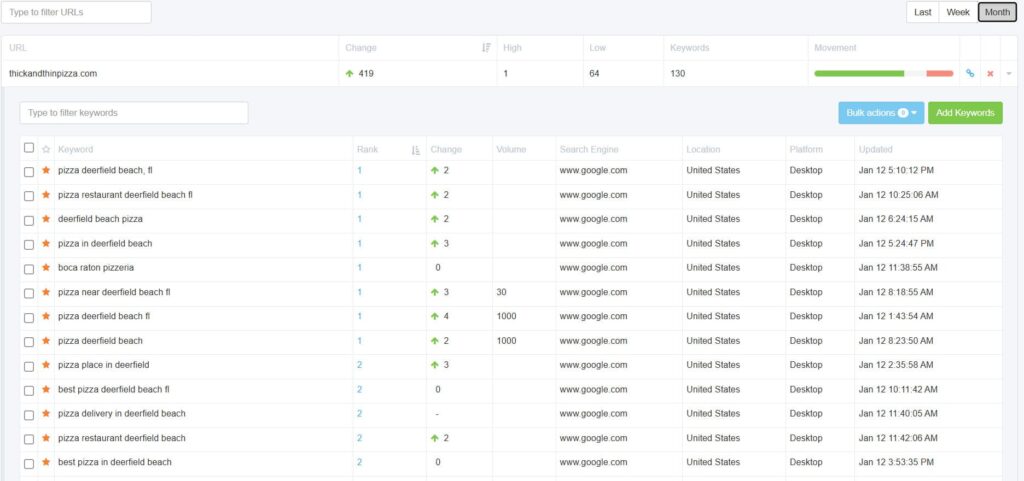
SEO James in the below blog article will deliver Page one Position One Search results SERP Search Engine Results Page. Google National Desktop Search Results January 2026.
SEO | PPC | AI Optimization | Search Engine Optimization | SEOJames
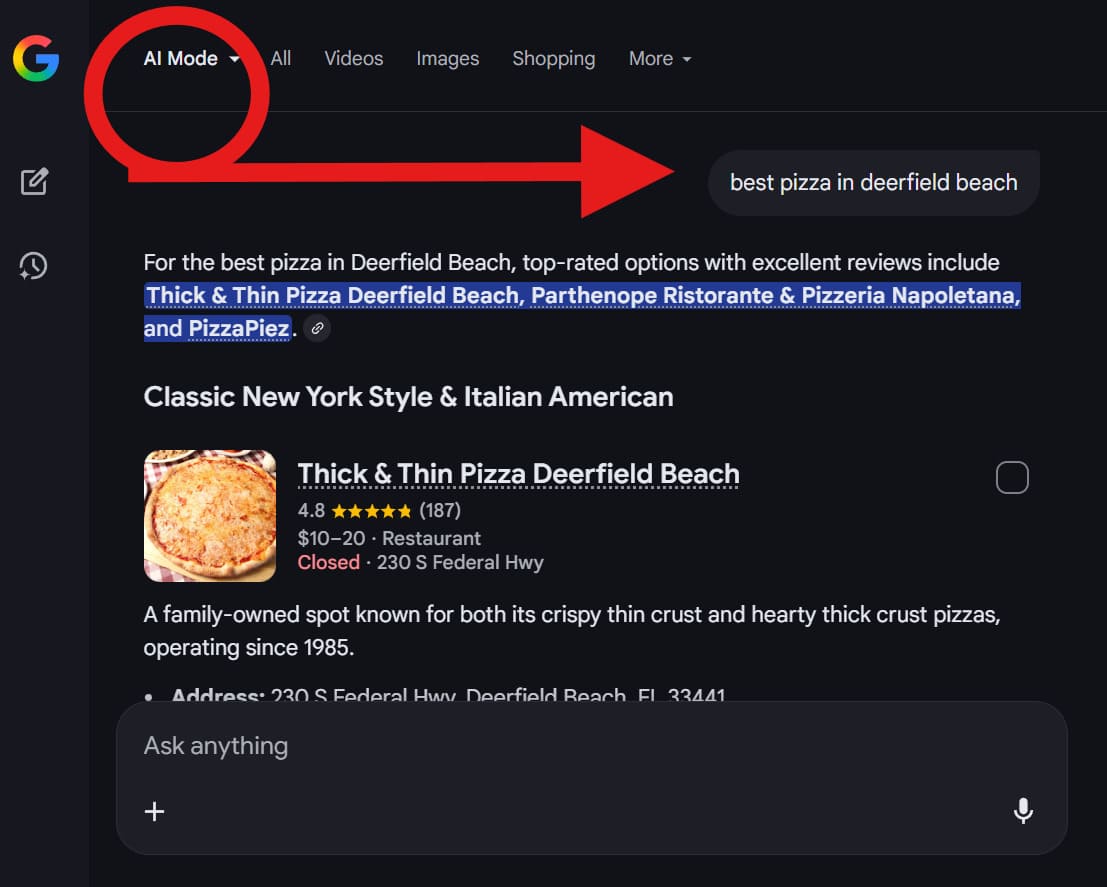
GOOGLE AI MODE (Best Pizza in Deerfield Beach)?

1. Optimize for AI Overviews & Featured Snippets
Google increasingly displays AI-generated summaries at the top of results. To secure “Position Zero” or a top-ranking spot:
Provide Direct Answers: Place a concise, 40-60 word answer to the primary search query at the beginning of your content to increase its chances of being pulled into AI Overviews.
Use Structured Data: Implement Schema Markup (e.g., FAQ, How-to) to provide search engines with context about your page’s information.
Formatting for Scannability: Use clear headers (H1 for title, H2/H3 for subheadings), bulleted lists, and tables of contents to make content easy for both AI and users to parse.
2. Master Search Intent and Topical Authority
Ranking #1 requires your content to be the absolute “best” answer for a specific user goal.
Target Long-Tail Keywords: Start with specific, lower-competition phrases (e.g., “best accounting software for freelancers” instead of “accounting software”) to build authority faster.
Build Content Clusters: Create a network of related articles around a central topic to establish Topical Authority in Google’s eyes.
Analyze the SERP: Before writing, look at what is currently ranking first. If the top results are “how-to” guides and you provide a “product page,” you are unlikely to rank #1 because you aren’t matching user intent.
3. Build High-Quality Backlinks
Backlinks remain a primary “trust signal” for ranking.
Focus on Niche-Relevant Sites: A few links from high-authority, industry-specific sites are more valuable than many low-quality directory links.
Create “Citable” Assets: Publish original data, industry surveys, or unique infographics that others naturally want to link to.
4. Technical Performance & User Experience (UX)
Google prioritizes websites that are fast and accessible.
Mobile-First Indexing: Ensure your site is fully responsive and optimized for mobile devices, as Google primarily uses the mobile version for ranking.
Core Web Vitals: Monitor your site’s speed, responsiveness, and visual stability using tools like the Google Search Console.
Security: Ensure your site uses HTTPS and is free of broken links or intrusive pop-ups.
5. Local SEO (For Businesses with Physical Locations)
If you are a local business, your “Position One” is often in the Google Map Pack.
Claim Your Profile: Verify and fully complete your Google Business Profile with accurate hours, categories, and photos.
Gather Reviews: Actively encourage customers to leave reviews, as popularity and ratings are key local ranking factors.
Summary of Tools to Use
Google Search Console: To request indexing and monitor technical health.
Ahrefs or Semrush: For keyword research and competitor backlink analysis.
Screaming Frog: For performing technical SEO audits.
6. MetaData and Title Tags
Your HTML title tag appears in browser tabs, bookmarks and in search result pages.
Make your title tags clear, concise (65 characters, 200-569 pixels) and include your most important keywords.
Check the title tags for thousands of pages at once using Site Crawl.
Great, your meta description contains between 70 and 160 characters spaces included (400 – 940 pixels).
A good meta description acts as an organic advertisement, so use enticing messaging with a clear call to action to maximize click-through rate. They allow you to influence how your web pages are described and displayed in search results.
Ensure that all of your web pages have a unique meta description that is explicit and contains your most important keywords (these appear in bold when they match part or all of the user’s search query).
Use WooRank’s Site Crawl to check thousands of pages for meta descriptions that are too long, too short or duplicated across multiple web pages.
7 Google Preview GMB
This is a representation of what your title tag and meta description will look like in Google search results for both mobile and desktop users. Searchers on mobile devices will also see your site’s favicon displayed next to the page’s URL or domain.
Search engines may create their own titles and descriptions if they are missing, poorly written and/or not relevant to the content on the page and cut short if they go over the character limit. So it’s important to be clear, concise and within the suggested character limit.
Check your title tag and meta description to make sure they are clear, concise, within the suggested character limit and that they convey the right message to encourage the viewer to click through to your site.
SERP FOX RESULTS JANUARY 2026 GOOGLE NATIONAL SEARCH RESULTS DESKTOP