

Online reviews can shape the reputation of a law firm almost instantly. A single negative review on a Google Business Profile can raise questions, discourage potential clients, and create unnecessary doubt before a prospect ever places a phone call. For attorneys, where trust and credibility matter more than almost anything else, unfair or fake reviews can become a serious business problem.
That is exactly why understanding the proper Google Business Profile review appeal process matters.
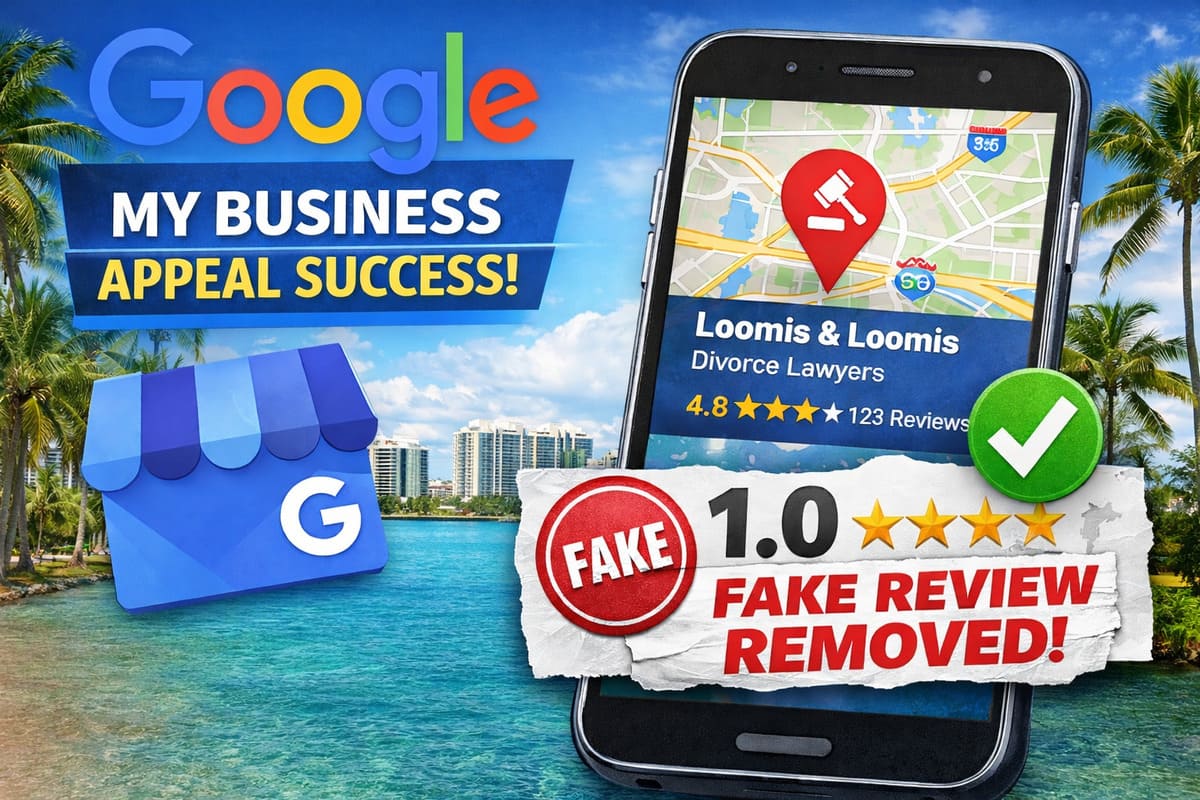
At SEO James, we recently helped Loomis & Loomis, P.A., a divorce law firm, secure the removal of a 1-star review from its Google Business Profile by following Google’s review appeal protocols carefully and professionally. This was not about gaming the system or trying to suppress legitimate feedback. It was about identifying a review that appeared to violate Google’s content policies and using the proper appeal path to pursue a fair and justified outcome.
The result was positive.
Google confirmed that the review had been removed from the law firm’s Business Profile because it appeared to violate policy. That type of result matters because it shows that when business owners and marketing professionals follow the correct process, they can sometimes resolve damaging review issues the right way.
Why Google reviews matter so much for law firms
A law firm’s online reputation is often one of the first things a prospective client sees. When someone searches for a divorce lawyer, family attorney, personal injury firm, or criminal defense lawyer, the Google Business Profile is usually front and center in search results. It is not just the website that gets evaluated. It is the map listing, the star rating, the review count, and the language used by previous reviewers.
For law firms, this creates both opportunity and risk.
Positive reviews can reinforce authority, trust, professionalism, and client satisfaction. Negative reviews can do the opposite. Even worse, a fake review or a review that violates Google’s rules can leave a misleading impression that harms a firm’s reputation unfairly.
This is why many attorneys and business owners ask the same question:
Can a fake Google review be removed?
The answer is yes, sometimes — but only when it clearly conflicts with Google’s review content rules and when the appeal is handled correctly.
The Loomis & Loomis case
In this case, Kerry Loomis of Loomis & Loomis, P.A. received confirmation from Google that a review had been removed from the firm’s Business Profile. The subject line of the confirmation email stated that a review had been removed from the Business Profile, and Google explained that it removed the review because it appeared to violate its policies.
That confirmation matters because it demonstrates a real-world example of a successful outcome after following the proper review-removal process.
The review in question came from a user identified as Ricky Brooks and included language attacking the concept behind the firm’s branding rather than offering what appeared to be a typical client-service complaint. Instead of reflecting a conventional review about an actual experience with the law firm, the content seemed to criticize the phrase “Christian divorce” itself and imply that the firm was trying to profit from that concept.
When reviews shift away from authentic client experience and into commentary that appears irrelevant, ideological, misleading, or otherwise inconsistent with platform policy, they may become eligible for closer review by Google.
In this situation, SEO James worked through the appeal process for Kerry Loomis and obtained a successful result.
What SEO James did the right way
There are many business owners who get frustrated with fake or damaging reviews and respond emotionally. That is understandable, but it is often not the best strategy.
What works better is a disciplined process.
At SEO James, the approach was not based on anger or guesswork. It was based on understanding that Google Business Profile reviews are governed by specific rules and appeal procedures. That means the goal is not simply to complain that a review is unfair. The goal is to determine whether the review appears to violate Google’s published standards and then present the issue properly through the available channels.
That distinction is important.
A negative review is not removable just because a business dislikes it. Google generally allows negative feedback when it reflects a genuine customer opinion or experience. But fake reviews, off-topic reviews, policy-violating reviews, and certain other categories may be subject to removal when flagged and appealed correctly.
In the Loomis & Loomis matter, the strategy involved staying within Google’s framework, documenting the issue, and pursuing the appeal in a professional way. The eventual removal shows that patience and protocol matter.
Why some negative reviews can be appealed
Not every bad review qualifies for removal. That is one of the biggest misunderstandings businesses have when they first deal with review problems.
A 1-star review can feel unfair and still remain online if it does not violate policy. Google is generally not in the business of removing criticism simply because it hurts a company’s feelings or affects conversion rates.
However, there are categories of reviews that may cross the line.
Examples can include:
- Reviews that appear fake or fabricated
- Reviews posted by someone with no real customer relationship
- Reviews that are off-topic or irrelevant to the actual business experience
- Reviews that involve harassment, hate, abuse, or threats
- Reviews intended to manipulate ratings unfairly
- Reviews that appear to violate platform rules in form or substance
For attorneys, law firms, and professional service businesses, these distinctions matter greatly because fake or inappropriate reviews can distort public trust.
That is where experience matters. Knowing how to identify a review that may violate the rules is one thing. Knowing how to handle the appeal process properly is another.
The value of following Google Business Profile rules
One of the biggest reasons businesses fail in review-removal efforts is that they do not understand the difference between frustration and evidence.
Google does not remove reviews simply because a business says, “This is hurting me.”
Instead, the platform looks for whether the review appears to conflict with its policies. That is why it is important to follow the correct process and present the concern clearly.
SEO James approached this case by respecting the platform’s procedures instead of trying shortcuts. That matters because a professional review appeal should be handled with a calm, rules-based mindset.
This is especially important for law firms. Attorneys operate in a trust-driven environment where public perception can directly impact consultations, referrals, and signed clients. A fake or improper review can influence a potential client at exactly the wrong moment — when they are deciding whether to reach out.
If an unfair review can be challenged properly, it is worth doing.
A fair and just outcome for the client
One of the most important parts of this case is the result itself.
Kerry Loomis responded with a simple but powerful message: “Nice job!!!”
That reaction reflects what many business owners feel when an unfair review is finally taken down. It is relief, validation, and appreciation that someone handled the process correctly.
For SEO James, this was not just about removing one review. It was about protecting the integrity of the client’s online reputation by using Google’s own framework to pursue a fair result.
That is an important difference.
The goal was not to silence valid criticism. The goal was to challenge content that appeared inconsistent with the platform’s rules and obtain a proper resolution.
When Google confirmed the review removal, it validated that the issue had merit.
Why this matters for other law firms
Many law firms assume they are stuck with every negative review forever. That is not always true.
If a review is legitimate, the best path may be a thoughtful public response and a broader strategy to build more authentic positive reviews over time. But if a review appears fake, malicious, irrelevant, or policy-violating, there may be a path to removal.
That path has to be handled carefully.
Law firms should avoid panic, emotional responses, and public arguments that make the situation worse. Instead, they should assess the review strategically:
- Does this appear to come from a real client?
- Is the content relevant to an actual service experience?
- Does it appear defamatory, misleading, or off-topic?
- Could it fit one of Google’s review policy violation categories?
- Is there a documented basis for appeal?
Those are the types of questions that matter.
When the answers point toward a likely violation, the next step is to use the proper Google Business Profile review appeal process rather than guess.
Reputation management is more than review removal
It is also important to understand that Google review management for law firms is not just about removal requests. It is part of a bigger online reputation strategy.
A law firm with a healthy review profile is in a stronger position overall. That means:
- Generating legitimate positive reviews from satisfied clients
- Monitoring new reviews regularly
- Responding professionally to criticism
- Flagging suspicious activity quickly
- Keeping the Business Profile updated and optimized
- Making sure the brand message is consistent across Google and the website
When these pieces work together, a firm becomes more resilient. One suspicious review has less power when the overall reputation is strong. But when a fake or policy-violating review appears, removal can still be an important part of protecting the brand.
That is why businesses often turn to experienced help. It is not just about the technical side of filing an appeal. It is about understanding how review issues fit into the broader search visibility and conversion picture.
What this says about SEO James
This case reflects something important about how SEO James works.
The focus was not on making exaggerated promises. It was on doing the research, understanding the rules, following the process, and advocating for the client within the platform’s guidelines.
That kind of work matters because online reputation issues are often emotional for business owners. When someone sees a damaging review on their law firm profile, it can feel personal and urgent. They want results, but they also need someone who understands the difference between what can be done and what should be done.
SEO James helped produce a positive result for Loomis & Loomis by staying disciplined and process-driven.
That is the value of having someone who understands how local search visibility, Google Business Profile management, and review appeals work together.
Final thoughts
The removal of the 1-star review for Loomis & Loomis, P.A. is a strong example of what can happen when a business follows the correct Google Business Profile appeal process for a review that appears to violate policy.
This was not luck.
It was the result of recognizing a questionable review, using the proper framework, and seeking a fair outcome through Google’s established process.
For law firms and other professional businesses, the lesson is clear: you do not always have to accept every negative review at face value. If a review appears fake, irrelevant, or otherwise inconsistent with platform rules, there may be a path forward.
The key is to approach the issue correctly.
At SEOJames.com, we help businesses navigate search visibility, reputation challenges, and Google Business Profile issues with strategy and professionalism. In the Loomis & Loomis case, that meant helping secure the removal of a harmful 1-star review and delivering a fair and just outcome for the client.
If your law firm or local business is dealing with suspicious, fake, or policy-violating Google reviews, the right approach can make all the difference.
A damaging review can hurt your brand.
A proper appeal can help protect it.